Solo Diving – The Ultimate Safety Mindset
Facebook
Pinterest
Threads
Email
The Emotionless Support Buddy: Why Solo Diving is the Ultimate Safety Mindset
The golden rule hammered into every open water “guppy’s” head from day one is absolute: Never, under any circumstances, dive alone. We are taught that the buddy system is our underwater life insurance policy.
But if you look at the actual reality of dive accidents, a troubling pattern emerges. Most incidents happen on the ascent or at the surface, and all too often, they involve a double accident. One untrained, panicked layperson experiences a crisis, and a well-meaning but equally unprepared buddy steps in to help—resulting in two injured divers instead of one.
True underwater self-reliance isn’t about being a reckless lone wolf. It’s about a fundamental shift in mindset: Solo diving is less about diving alone, and more about being prepared to end up alone.
The Core Philosophy: Carrying Your Buddy on Your Back
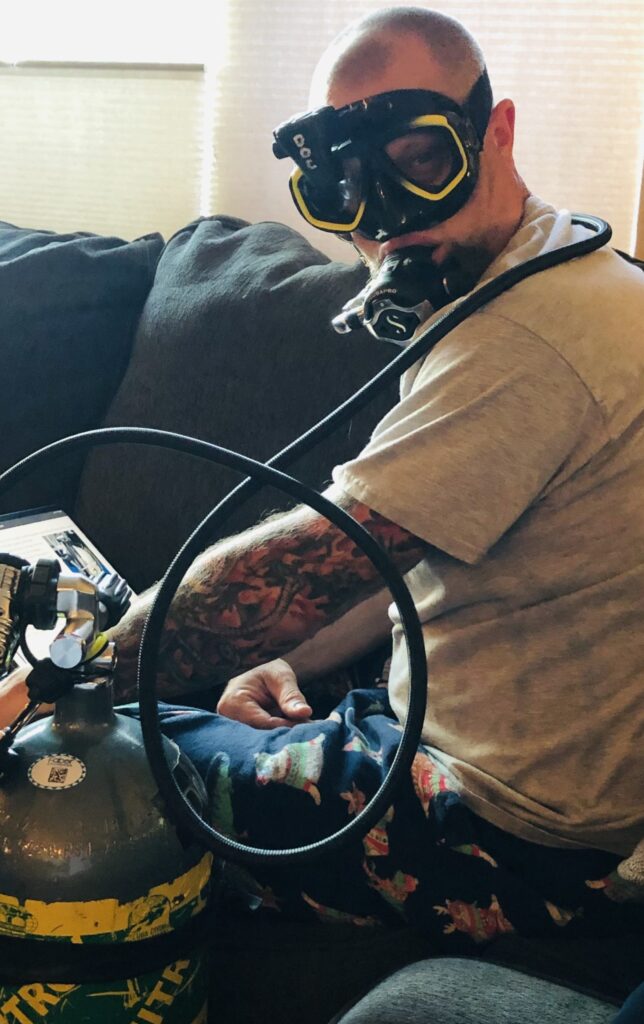
When you dive solo, you don’t actually leave your buddy behind on the boat. You just replace them with an “emotionless support buddy”—which, honestly, is a lot less likely to argue about the dive plan or drain their tank in twenty minutes.
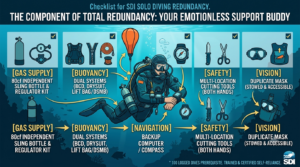
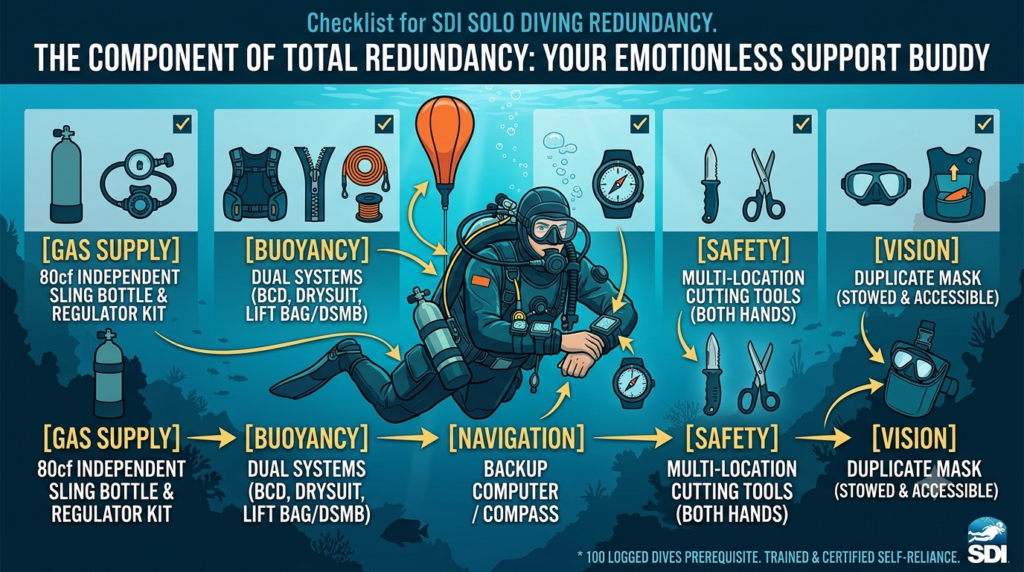
Think about why a buddy is there in the first place: to share gas if you run out, or to guide you if you lose a mask. A certified solo diver solves these dependencies before splashing by carrying duplicates of everything.
Gas Supply
30-80cf Independent sling or pony bottle with SPG and regulator kit.
Buoyancy
BCD, Dry Suit, Lift bag or DSMB with enough lift capacity
Dive Computer/Compass
Back up computer or bottom timer with tables and compass
Vision
Duplicate Mask (stowed and accessible)
Safety
Multi-location Cutting Tools (Accessible by both hands)
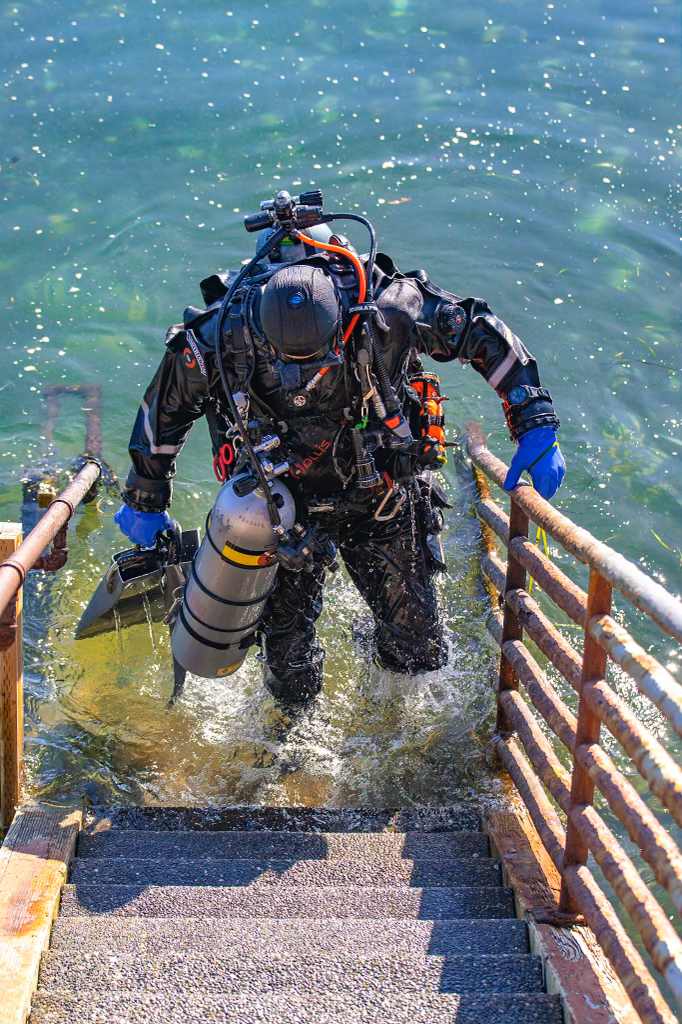
Instead of hovering in place and waiting for another diver to figure out how to lend assistance, you carry your own solutions. By ensuring you can resolve a catastrophic equipment failure or gas loss entirely on your own, you become an asset to the ocean rather than a liability.
The Pros and Cons of the Silent World
Diving is a unique recreation (and let’s be clear, it is a recreation, not a sport—no one is playing defense down there). It forces a quiet, meditative state that perfectly mirrors riding a motorcycle down an empty highway. It’s just the open road, the roar of the engine, and an unspoken ballet of moving through the world.
But that absolute freedom comes with a distinct psychological weight.
The Pros: Ultimate Liberation & No Babysitting
Zero Distractions: You are entirely unencumbered by another diver’s wants, comfort levels, freezing hands, or terrible air consumption. The route is yours, the pace is yours, and you don’t have to wonder if they are actually enjoying the scenery.
Overwhelming Conservatism: When you know with 100% certainty that no one is coming to save your skin, your psychology shifts. You plan the dive and dive the plan. There is no peer pressure to push past a comfort zone, so you naturally err on the side of extreme caution.
The Ultimate Tool for Instructors: For an Open Water instructor leading a class of students, they are effectively already diving “alone” in a sea of dependent variables. Being solo-trained means the instructor actually has the redundant gas and tools to survive their own gear glitch while managing a handful of panicked novices.
The Cons: The Weight of the "Unshared" Moment
The Psychological Echo Chamber: When a problem arises, the silence gets incredibly loud, incredibly fast. A solo diver must possess the mental fortitude to clear the “Nitrogen Narcosis fog” and solve the issue without a physical partner to anchor them.
An Unrealized Loss: You might turn around at 130 feet and find an eight-foot sixgill shark slithering down the embankment right beside your shoulder. It’s an epic, spine-tingling moment—but without a buddy to vibe off of, it remains just a story. Every time you retell it, there’s a quiet sense of an unshared milestone.
The Surface Protocol: Filing the "Flight Plan"
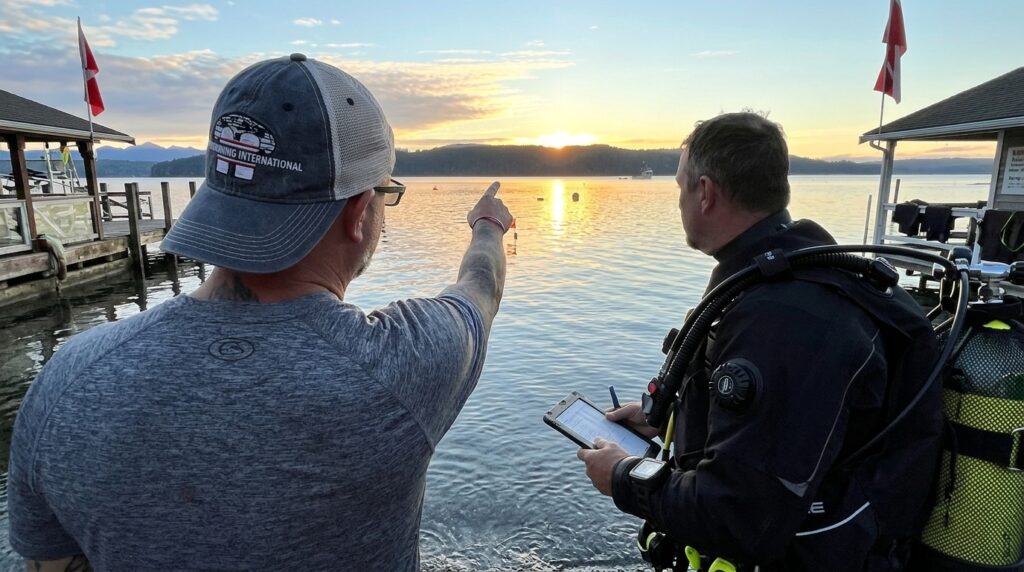
True self-reliance doesn’t start when you flip backward off the gunwale; it starts on the beach or the deck. Because you don’t have a physical buddy keeping tabs on you underwater, your safety web has to extend all the way back to dry land.
Before a disciplined solo diver ever wets a fin, they file a strict surface “Flight Plan” with a reliable person topside—whether that’s a shore contact or the boat captain. This isn’t a casual “Hey, I’ll be back in a bit.” It’s a formal log containing:
Exact Splash Time & Location: Where you went in, and exactly when.
Maximum Target Runtime: Your planned dive duration based on conservative gas calculations.
The Hard Trigger Time: A specific, unyielding clock time on the surface. If you have not stepped back onto that boat or beach by that exact minute, the shore contact has immediate instructions to pull the trigger and call for emergency services.
By tying your dive directly to a ticking clock on land, you ensure that if an accident does render you incapable of self-rescue, the rescue team is mobilized immediately—not hours later when people finally notice your truck is still parked at the boat ramp.
The 100-Dive Threshold
This level of self-reliance isn’t for brand new divers. If a fresh open water graduate tells you they want to dive solo right out of the gate, you should probably question their mindset. The SDI Solo Diver course requires a prerequisite of 100 logged dives—the exact same number required to become an instructor. It demands a baseline of maturity and stable buoyancy before you ever start clipping extra cylinders to your chest.
The Takeaway: It’s About Responsibility
If we want to build a safer community of divers, we have to change how we view solo training. It shouldn’t be relegated to a fringe, “extreme” specialty for daredevils.
Every Open Water instructor should be trained as a solo diver. By carrying a separate bailout gas supply and mastering the art of self-rescue, instructors set a powerful precedent for the next generation of “guppies”: true safety isn’t outsourcing your survival to a buddy; it’s being entirely accountable for yourself.
What are your thoughts?
Let’s do a quick pulse check: Where do you land on the solo vs. never-solo continuum?
When we look at how we train instructors, it begs the question: is solo training a genuine win for safety, or is it just a flashy feature for future failure? Drop your take below—let’s hash it out!

Dr Eric "Doc" Strand, PhD, OMD
Dr. Eric "Doc" Strand (USMC Veteran) spent 30 years as a physician dedicated to community wellness. Recently retired after 30 years of clinical practice, Doc now spends his time enjoying the profound stillness and weightless silence of the underwater world. As an SDI Instructor Trainer, Dr. Strand uses his medical and military background to inform his writing on safety, physiology, and technical diving. A published author of medical practice management guides and poetry, Doc pairs his technical expertise with a creative flair to make complex diving topics accessible, engaging, and insightful.
Dr. Strand, owner and Chief Spartan of Spartan SCUBA in Gresham, Oregon, is also an active emergency response member of the Clark County Search & Recovery Dive Team, an instructor for both the Multnomah County and Clark County SAR teams, and is the Dive Safety Officer for the Maritime Archaeological Society, headquartered in Astoria, Oregon.