A 5 Star Professional Development Center

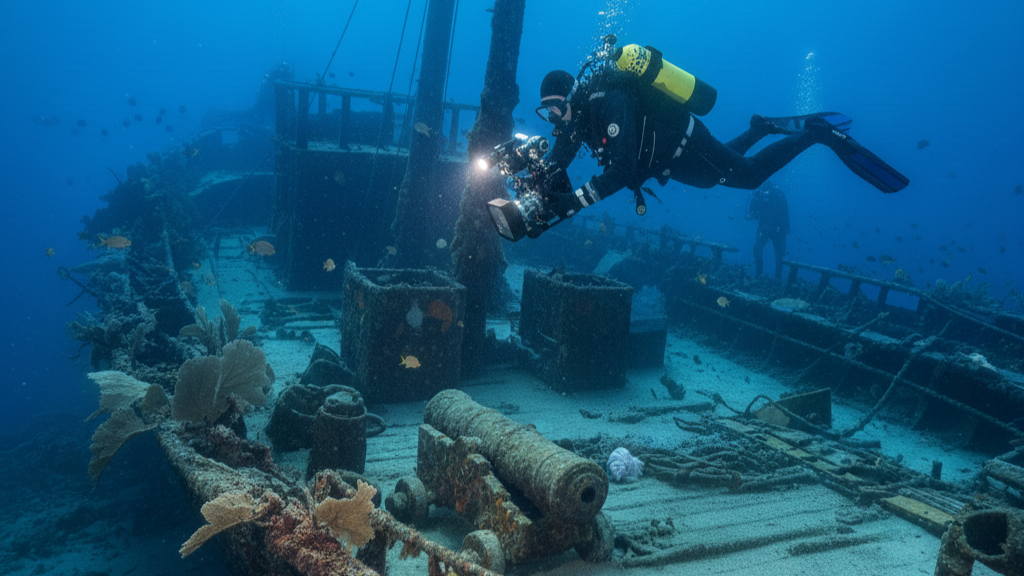
A trained maritime archaeologist maintains perfect neutral buoyancy above the deck of a historic shipwreck while using a specialized underwater camera and strobe to document the site without contact.
Documenting History: Utilizing exceptional buoyancy control is critical. Archaeologists photograph and survey the wreck without contact to prevent damage to fragile materials.
Facebook
Pinterest
Threads
Email

The Thrill of Maritime Archaeology

For many, scuba diving is defined by vibrant reefs and colorful marine life. But for a select few, the real allure lies not in nature, but in human history suspended beneath the waves. Maritime archaeology offers a unique perspective on the past that terrestrial digging simply cannot match. It is the closest we can get to actual time travel, but it requires a level of skill and discipline far beyond the recreational norm.

The defining characteristic of underwater archaeology is the profound sense of discovery. There is an indescribable rush when descending onto a site, realizing that yours might be the first human eyes to gaze upon a vessel since its final moments centuries ago. A shipwreck isn’t just debris; it is a pristine time capsule, a frozen moment of history preserved by the very water that claimed it.

Underwater archaeology
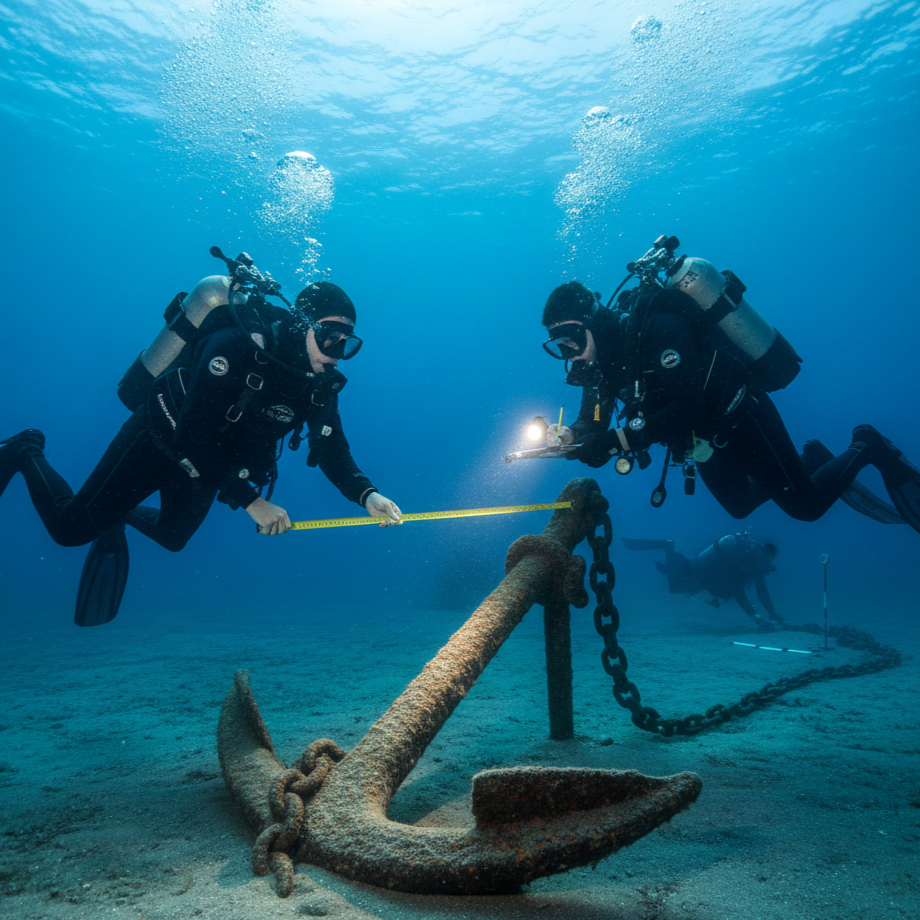
Precision in the Deep: Measuring large features like anchors requires teamwork and careful documentation, even in cold, low-visibility waters.

The excitement extends beyond ships. Consider the awe of mapping a submerged coastal settlement—documenting the remains of a lost civilization or ancient tribal grounds that rising seas claimed millennia ago. In these moments, you aren’t just reading history books; you are swimming through the pages.

However, this work is rarely easy. “Science” in this context often means working in hostile environments. We don’t always have the luxury of calm, tropical waters. The challenge often begins before we even hit the water, gearing up on a boat platform pitching in six-foot ocean swells, or timing an entry into a ripping current to ensure we drift precisely onto a target coordinates.

Once on the bottom, the margin for error disappears. This is where technical skill becomes just as important as historical knowledge. Exceptional buoyancy control is not just a recommendation; it is a requirement. We are often working with organic materials—wood, leather, rope—that have softened over centuries. A single careless fin kick can disintegrate a fragile artifact forever.

Furthermore, we are often working in environments with silty bottoms. If a diver’s trim is off, the wash from their fins can cause a “silt-out,” dropping visibility to zero instantly. This not only halts the scientific work but creates a genuine safety hazard for the entire team.

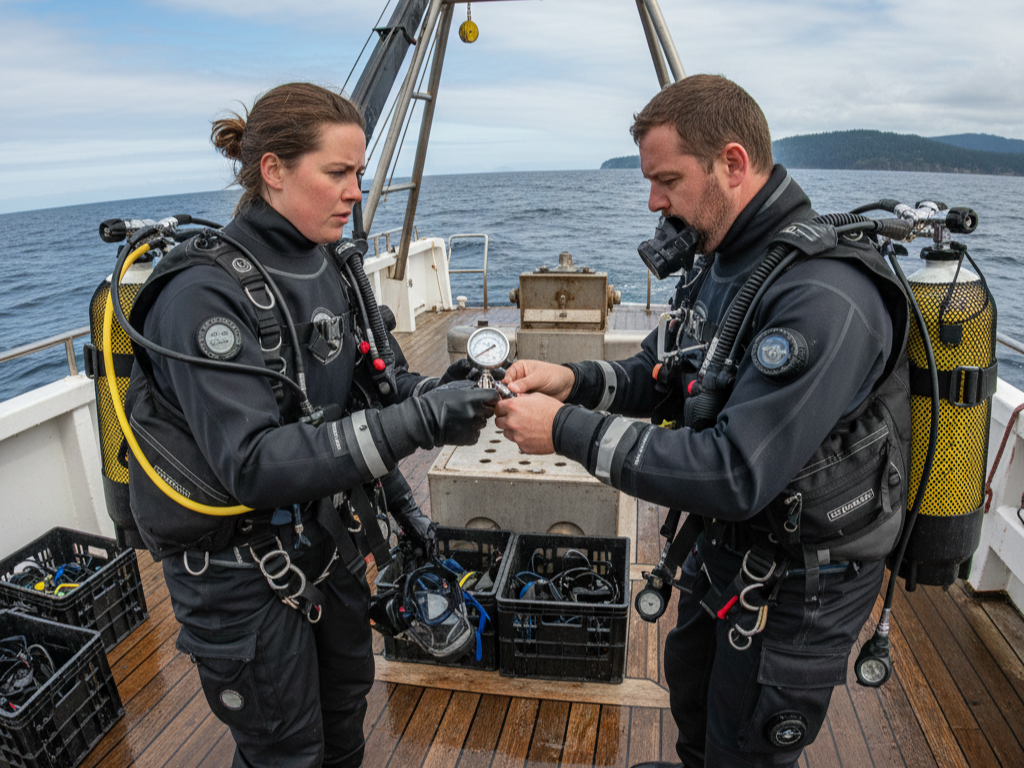
Two fully geared scientific divers on a boat deck perform a final pre-dive buddy check, confirming air, connections, and communication equipment before entering the water.
Safety First, History Second: Rigorous pre-dive checks are essential for archaeological expeditions, particularly when working with strong currents or deep profiles.

Because we work in these challenging conditions—low visibility, cold water, strong currents, and complex artifact fields—safety is absolute. Archaeological diving requires planning and discipline far beyond typical recreational profiles.

We explore the past to understand the future, but we must do so with respect for the ocean and the history it holds.

A Note on Safety

Speaking of safety, I am proud to share a personal update. I have recently taken on the role of Dive Safety Officer for the Maritime Archaeological Society here in Oregon. It is a distinct honor to ensure that our teams can explore Oregon’s rich, submerged history effectively and return home safely after every expedition.

If you’re interested in joining us as we work to rebuild the dive operations for MAS, shoot me a message with your contact details and a brief summary of your dive experience. We are planning to train the team up to start mission diving toward the end of 2026.

Dive safe, and keep exploring!

~Doc

More from Doc

Leave a Reply