


Underwater Archaeology Diver
$775.00
Sharpen your buoyancy and research skills with the 4-day Spartan Underwater Archaeology course.
Description
Underwater Archaeology
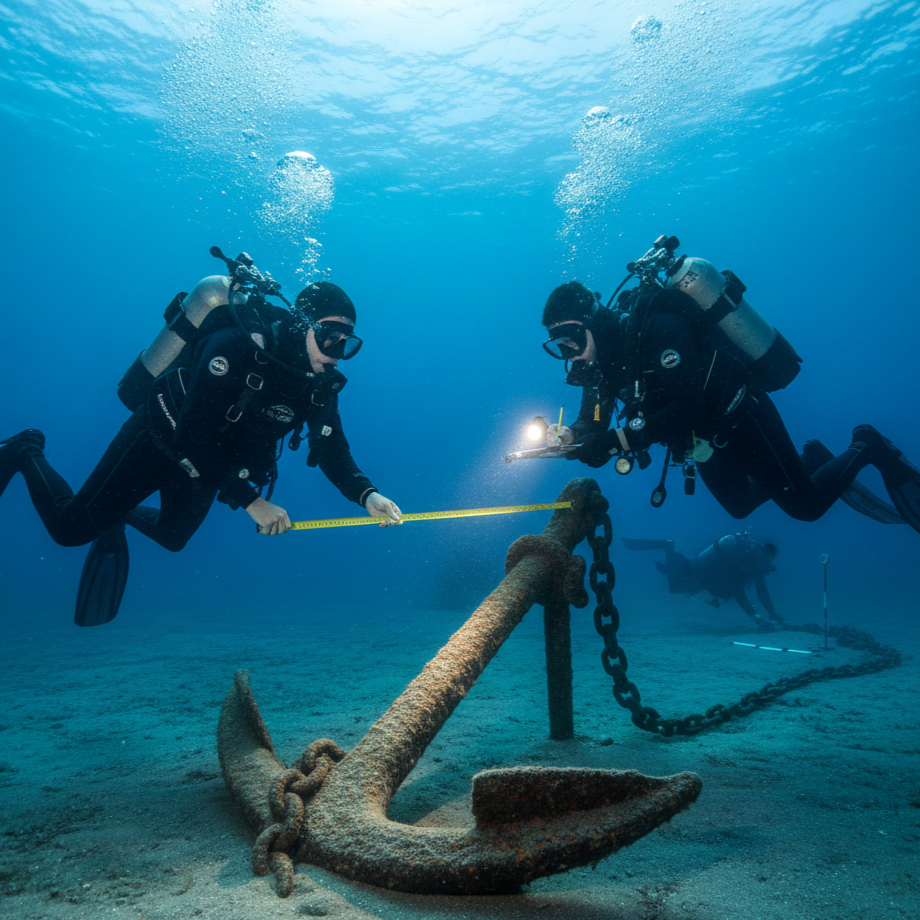
The SDI Underwater Archaeology course teaches recreational divers non-intrusive survey and documentation techniques for shipwrecks and submerged sites, focusing on mapping (like 2D trilateration), photography, ethics, and legal aspects, usually involving classroom theory, pool sessions, and open water dives to identify and record cultural resources without disturbing them, making divers skilled in responsible exploration.
Cost of course includes: time with instructor(s); four open water dives; registration and certification upon completion. Does not include rental equipment, travel, food, or lodging expenses.
Prerequisites:
- SDI Open Water Scuba Diver certification (or equivalent) is required.
- Minimum age 18; 15 with parent/guardian consent.
Who this course is for:
This course is for history buffs and curious explorers to gain specific skills in underwater investigation, allowing them to participate in meaningful projects, explore historical sites, and contribute to preserving maritime history.
Key Course Components:
- Classroom/Theory: Learn principles of underwater archaeology, site ethics, legal protections, basic oceanography, and identification of marine life.
- Purpose: To acquaint the diver with the fascinating world of underwater archaeology and teach them how to properly conduct archaeological surveys without disturbing the site.
- Skills Development: Practice non-intrusive methods like:
- Methodology: Non-intrusive survey techniques and 2D trilateration mapping.
- Documentation: Sketching, photography, and video recording artifacts in place (in situ).
- Ethics & Law: A heavy focus on the preservation of history, the “time capsule” nature of shipwrecks, and legal protections for submerged cultural resources.
- Survey Techniques: Transect tapes, quadrats, and data collection.
- Conservation: Principles of site preservation and artifact management.
- Practical Dives: Hands-on sessions in pools and open water to apply learned skills, often involving mapping and surveying a simulated or real wreck site.
What You’ll Learn:
- How to behave responsibly around submerged cultural heritage.
- Detailed survey and mapping techniques for shipwreck sites.
- Ethical considerations for working with underwater historical sites.
- How to contribute to marine science and conservation.
To complete the SDI Underwater Archaeology Diver program in 2026, students must demonstrate a combination of advanced diving proficiency and specific archaeological field techniques.
Core Archaeological Skills
- Site Surveying & Mapping: Proficiency in 2D site survey techniques, including the use of trilateration (measuring from fixed points) to create accurate scale drawings.
- Documentation & Recording: Using specialized tools like underwater slates, mylar sheets, and pencils to sketch artifacts and site layouts.
- Photography & Videography: Recording site details, stratigraphy, and artifact deposition using cameras and video equipment for thorough documentation.
- Data Interpretation: The ability to interpret recorded data to understand the nature of a site, such as identifying shipwreck remains or artifact clusters.
- Non-Invasive Techniques: Mastering “look but don’t touch” methods to explore and document sites without disturbing or damaging historic materials.
Practical Diving Skills
- Buoyancy Control: Maintaining precise neutral buoyancy is critical to avoid disturbing the seabed, damaging fragile artifacts, or silt-outs that obscure visibility.
- Underwater Navigation: Utilizing both compass and natural navigation to orient within a survey grid and accurately relocate specific artifacts.
- Teamwork & Communication: Coordinating with dive partners to perform multi-person tasks like stretching tape measures or managing a planning frame.
- Equipment Mastery: Testing and managing standard dive gear alongside specialized archaeological tools like tape measures, rulers, and grids.
General Requirements
- Dive Planning: Demonstrating sound judgment in planning dives within depth and time limits (15–60 feet for this course).
- Logbook Maintenance: Properly logging all four required training dives, noting specific archaeological tasks completed.
Only logged in customers who have purchased this product may leave a review.
Reviews
There are no reviews yet.